


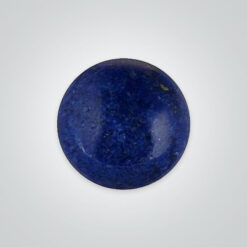

Lapis Lazuli
Lapis Lazuli is a semiprecious ultramarine blue-coloured gemstone that has been famous since antiquity. The rich blue stone with shining flecks of gold is popular across continents and has been used in art and jewellery making. Pliny, the classical Roman historian, rightly termed it as “a fragment of the starry firmament.” Truly, the dazzling stone resembles a piece of the blue sky with a thousand stars.
Origin
Even though some people believe that the origin of lapis lazuli is Egypt, its origin is in Afghanistan. The origin of the name has Latin and Arabic roots. ‘Lapis’ in Latin and ‘lazaward’ in Arabic and Persian means ‘stone’. We can also trace the word ‘lazuli’ to the Medieval Latin word ‘lazulum’, implying ‘sky’ or ‘heaven’. Because of its color and appearance, it was referred to as a ‘heaven stone’ or a stone from the skies.
Composition
The gemstone is made of multiple sodalite minerals like hauyne, sodalite, lazurite and nosean. Lazurite is the main mineral, a blue silicate of the sodalite group, which lends the blue color to the rock. The specks of gold in this gemstone occur due to pyrite and calcite.
Chemical Composition
| Mineral Information | Sodium calcium aluminum silicate |
| Color | Deep blue |
| Chemical Composition | Na8(Al6Si6O24)S2 |
| Class | Silicates |
| Subclass | Tectosilicates |
| Specific Gravity | 2.4 – 2.9 |
| Hardness | 5-6 (Mohs) |
| Refractive Index | 1.5 |
Geographical Occurrence
Historically, lapis lazuli is majorly found in Afghanistan. Russia and USA also have sources, but Afghanistan produces the best quality of the stone. Badakshan in Afghanistan is one of the oldest mines of lapis lazuli. It produces the world’s finest variety of this stone in large crystals. Pakistan also produces solid, dark blue lapis lazuli stones with little specks of yellow pyrite. California produces bluish-grey lapis lazuli stones with white specks, inferior to the Afghan variety.
History
In ancient times, mentions of sapphire in several places are actually believed to be lapis lazuli. The oldest mentions of lapis lazuli go back to ancient Egypt. Artifacts dating back to those ancient civilizations show usage of this stone. Tutankhamun’s mask, too, has lapis lazuli inlay in the eyes. Artifacts of the Indus Valley Civilization also show the usage of lapis lazuli. It isn’t surprising since Afghanistan was the major source of the stone since the oldest times in history. As early as in the 7th century BC, lapis lazuli was found in the mines of Sar-i-Sang in Afghanistan. By the Middle Ages, lapis lazuli stones were exported to Europe. When ground into powder form, they created the natural ultramarine blue color. It was the most expensive blue pigments and was used by Renaissance and Baroque artists for their paintings.
Astrological and Spiritual Significance
Lapiz Lazuli is a stone that is associated with the sky. It is suitable for zodiac signs like Sagittarius, Capricorn and Libra. It is said to attract good luck for these signs. It also helps to eliminate bad thoughts and improve performance. Lapiz lazuli is also associated with wisdom and calmness and protects the wearer from negative energies. The stone has the magical benefits of relieving stress and bringing inner peace. Mystics also speak of the medical benefits of lapis lazuli, such as lowering blood pressure, reducing insomnia and depression.
Use in Jewellery
Lapis lazuli is commonly used for pendants, earrings, necklaces, brooches and rings. It can be worn as a zodiac stone in the form of rings and pendants for astrological benefits. It is also used purely as a gemstone for jewellery because of its brilliant colour. They make exquisite statement jewellery when set into rings, brooches or chunky neckpieces. It is necessary to keep the stones away from contact with harsh chemicals. The stones also need proper care, and it is best to re-polish them after periodic intervals to keep the shine intact.